

About Us
Soundproofing is built on a simple idea — to create quieter, more comfortable spaces. We specialize in reducing noise with proven materials and methods, so your focus stays where it matters most — not on the distractions around you.
Contact InfoContact Info
- Office No. 9 Crescent Plaza, F10 Markaz, Islamabad
- 03127703712
- soundproofingpk@gmail.com
- Week Days: 09.00 to 18.00 Sunday: Closed
A Complete Guide to Soundproofing Costs in Pakistan (2026)
May/26
- admin-sp
- soundproofing
- May 17, 2026
- 0 Comments
Living with soundproofing in Pakistan’s major urban centers—Karachi, Lahore, and Islamabad—often means living with noise. Whether it is the constant hum of traffic, the blare of horns, the roar of generators, or the local mosque’s loudspeaker, noise pollution is an accepted part of daily life for many.
However, as remote work grows and home entertainment standards rise, more Pakistanis are looking to reclaim their peace. The question is no longer if you can soundproof your home, but how much does it cost?
The answer varies wildly depending on whether you are a DIY enthusiast sealing a door gap or a business building a professional recording studio. Here is your comprehensive breakdown of soundproofing prices in Pakistan for 2026.
The High-End Solution: Soundproof Windows
The single biggest entry point for noise in Pakistani homes is the window. Single-pane glass and ill-fitting frames are terrible at stopping sound. For those living on main boulevards in DHA or near industrial areas, soundproof windows are the gold standard for a permanent fix.
How Much Do They Cost?
The price of soundproofing windows in Pakistan is typically calculated on a per square foot basis. According to industry guides for 2026, the rates depend heavily on the material and mechanism.
- Fixed Glass Windows (Non-Openable): Rs. 1,200 – Rs. 1,800 per sq. ft.
- Best for: Staircases or small openings where ventilation is not required.
- Sliding uPVC Windows: Rs. 1,800 – Rs. 2,800 per sq. ft.
- Best for: Apartments and modern homes where space is limited.
- Casement (Openable) Windows: Rs. 2,500 – Rs. 3,800 per sq. ft.
- Best for: Maximizing sealing pressure; these close against the frame like a fridge door, offering superior noise blocking.
- Tilt & Turn (Premium): Rs. 3,500 – Rs. 4,500+ per sq. ft.
- Best for: High-end villas and luxury homes requiring German-style hardware.
What impacts the price?
- Glass Type: Double glazing is standard, but laminated glass is the true hero for acoustic insulation. It costs more than standard double glazing but stops specific frequency noises (like traffic) better.
- Profile: uPVC (unplasticized polyvinyl chloride) is currently the market leader due to its multi-chambered design that traps heat and sound. Aluminum with “thermal breaks” is also effective but often more expensive for the same level of acoustic performance.
Interior Studio Solutions: Acoustic Panels & Foam
If you are a YouTuber, a musician, or a podcaster, you aren’t trying to stop the neighbor’s noise; you are trying to stop the echo inside your room (reverberation).
This requires acoustic treatment, not necessarily “soundproofing.”
Market Rates for Acoustic Materials
The market for acoustic foam in Pakistan is growing, but it remains heavily dependent on imports, which affects pricing.
- Acoustic Foam Panels (Wedge/Pyramid):
- Local/Generic brands: Rs. 400 – Rs. 800 per sq. ft.
- Imported (e.g., True North): A pack of 12 tiles (1×1 ft each) can cost Rs. 13,000 to Rs. 15,000 delivered via importers, which is roughly Rs. 1,100 per sq. ft.
- Polyester Acoustic Panels (Aesthetic): Rs. 600 – Rs. 1,400 per sq. ft. These are more durable and visually appealing than standard foam.
- Fiberglass Insulation (Behind walls): Rs. 300 – Rs. 700 per sq. ft. Very effective, but requires professional installation for safety.
Crucial Reality Check: Do not expect a few foam panels on your wall to stop your neighbor’s dog from barking. Foam stops echo inside the room; it does not block sound from entering through the wall.
The Professional Barrier: Mass Loaded Vinyl (MLV)
For those who need serious privacy—such as doctors’ clinics, executive offices, or home theaters—Mass Loaded Vinyl (MLV) is the industry standard. It is a heavy, rubber-like sheet that physically blocks sound waves.
- Price per sq. ft.: Rs. 1,200 – Rs. 2,500.
- Why so expensive? MLV is heavy and dense. It is the only material on this list that truly “blocks” sound rather than just absorbing it. It is usually installed within wall cavities or under floorboards.
The Low-Budget Heroes: DIY Solutions
Soundproofing doesn’t have to break the bank. In Pakistan, some of the most effective solutions are also the cheapest, utilizing local materials and traditional methods .
1. The. “Landa Bazaar” Curtain Trick
Thick, heavy fabric absorbs sound remarkably well.
- Cost: Visit any local cloth market (Landa Bazaar) or fabric store. Heavy velvet or “jute” curtains can be stitched for Rs. 1,500 to Rs. 3,000 per window, a fraction of the cost of imported acoustic curtains.
- Effectiveness: High. Double-layering these curtains can cut external noise by 30-40%.
2. Door Seals and “Snakes”
Most noise comes through the gap under the door.
- Door Snake (Draft Stopper): A fabric tube filled with sand or rice.
- Cost: Rs. 500 – Rs. 800 (or free if you DIY with an old towel and needle/thread).
- Weather Stripping: Adhesive rubber seals for the door frame.
- Cost: Rs. 200 – Rs. 500 per door (available at hardware stores).
3. The Bookshelf Method
- Cost: Variable (the cost of books).
- Method: Place a large, deep bookshelf against a shared wall (especially in a semi-detached house or apartment). Fill it with books. The mass and density of the paper act as excellent sound diffusers and blockers.
4. Carpets
Pakistani homes love marble and tile, which act like a skate park for sound waves—they bounce everywhere.
- Cost: A thick woolen carpet or shaggy rug from a local market can cost as little as Rs. 2,000 to Rs. 5,000 for a medium room, drastically reducing echo.
Summary: Estimating Total Project Costs
To help you budget, here is a quick reference for total project costs in Pakistan, including materials and professional installation where necessary:
| Project Type | Estimated Price Range (PKR) | Best For |
|---|---|---|
| DIY Door/Window Sealing | Rs. 1,000 – Rs. 5,000 | Renters, students, and low-budget flats. |
| Home Office (Echo Reduction) | Rs. 30,000 – Rs. 80,000 | Remote workers and Zoom calls. |
| Small Conference Room | Rs. 80,000 – Rs. 180,000 | Corporate privacy. |
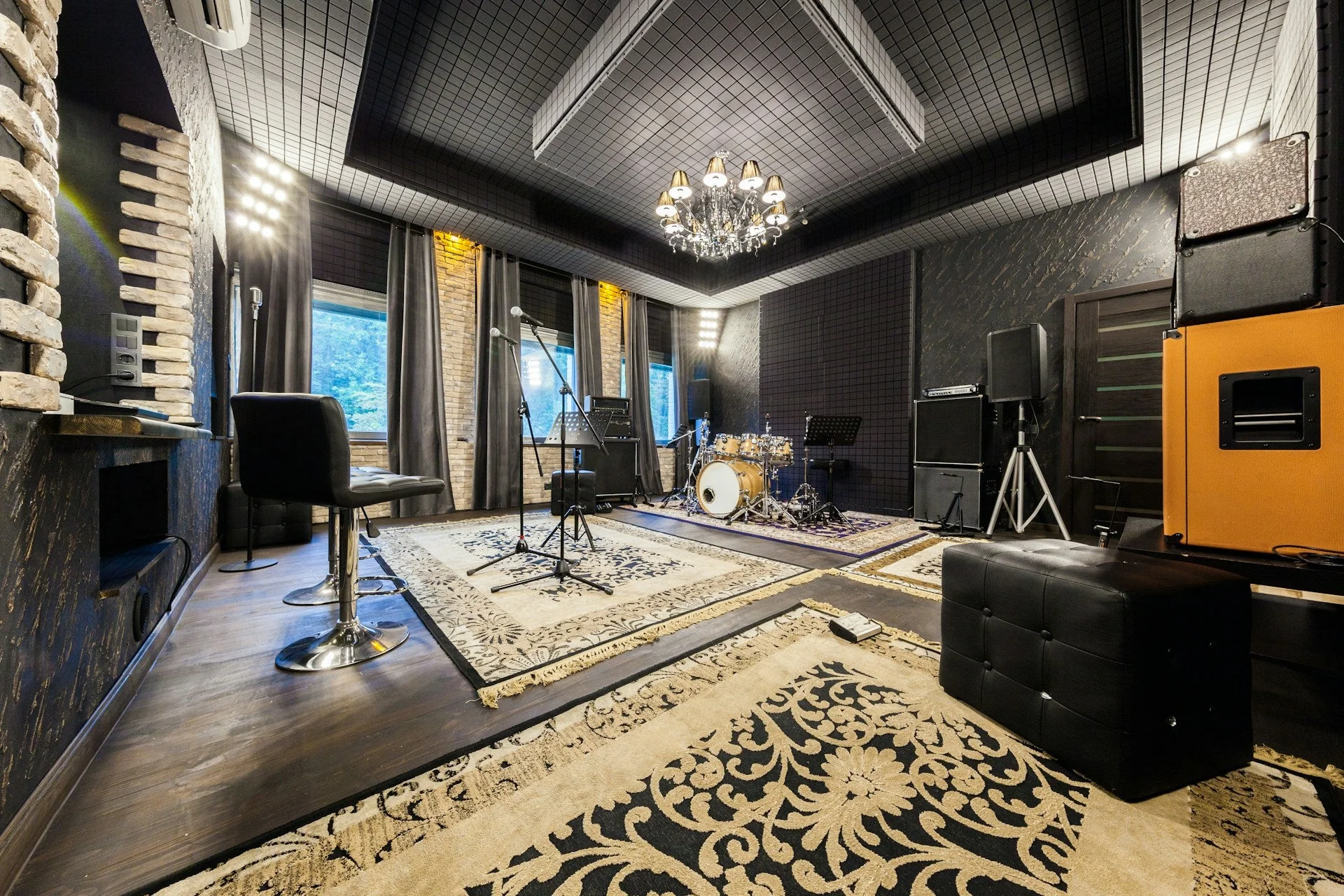
| Recording Studio (Home) | Rs. 300,000 – Rs. 600,000 | Musicians, voice-over artists. |
| Full Home uPVC Window Upgrade | Rs. 150,000 – Rs. 500,000+ (depending on house size) | Homeowners near main roads. |
Final Verdict
If you are on a tight budget, start with “door snakes” and heavy curtains—you will be shocked at the difference. If you are renovating your home, invest in uPVC frames with laminated glass; it adds property value. If you are renting, use thick foam and carpets, but understand you cannot fully “block” noise without structural changes.
Leave a Comment