

About Us
Soundproofing is built on a simple idea — to create quieter, more comfortable spaces. We specialize in reducing noise with proven materials and methods, so your focus stays where it matters most — not on the distractions around you.
Contact InfoContact Info
- Office No. 9 Crescent Plaza, F10 Markaz, Islamabad
- 03127703712
- soundproofingpk@gmail.com
- Week Days: 09.00 to 18.00 Sunday: Closed
Understanding Soundproofing vs. Acoustic Treatment
Feb/26
- admin-sp
- soundproofing
- February 16, 2026
- 0 Comments
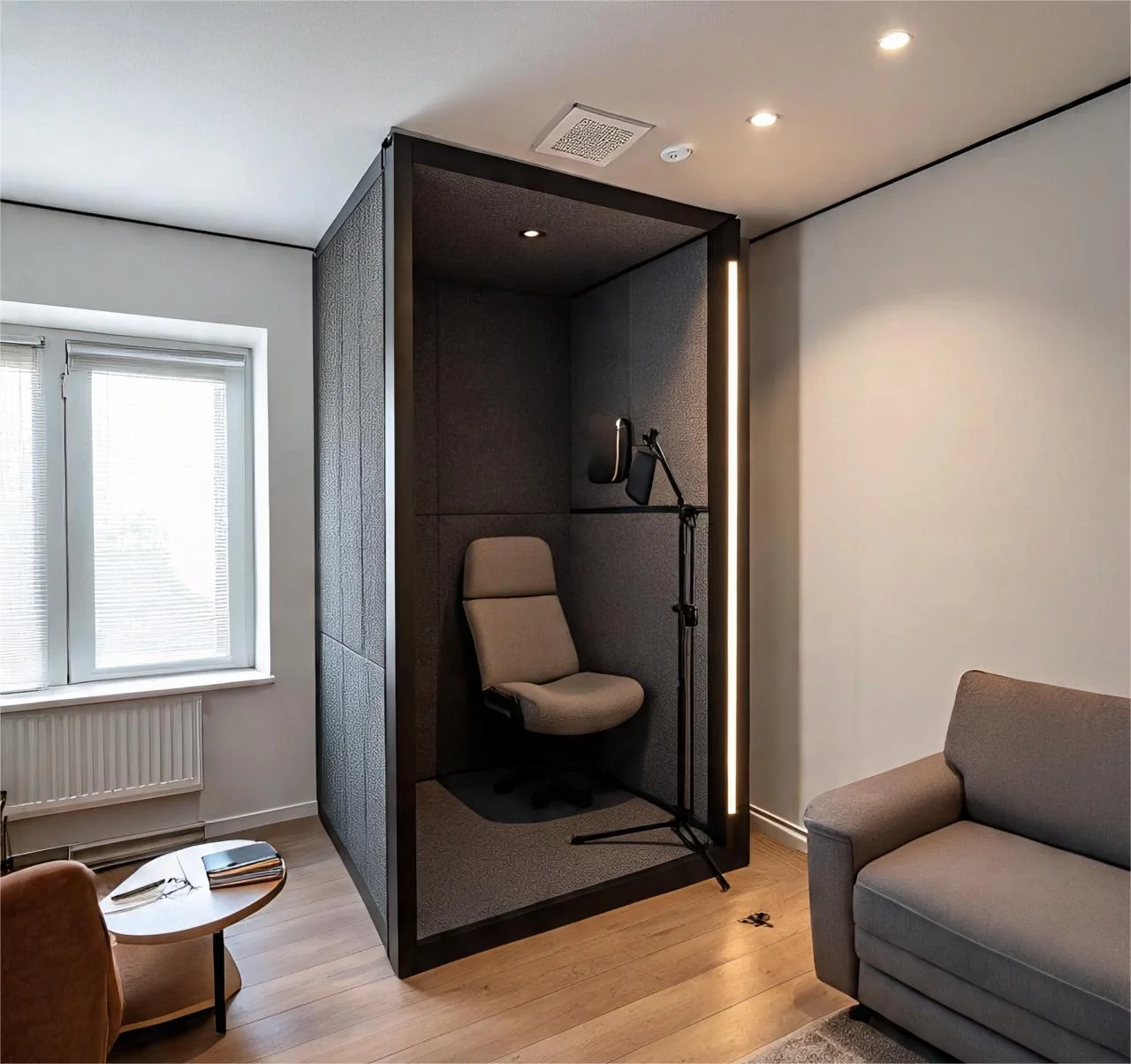
A common point of confusion is the difference between soundproofing and acoustic treatment, as the terms are often used interchangeably. However, they address two different problems. Soundproofing, also known as sound isolation, is the process of preventing sound from traveling between spaces . Its goal is to stop noise from entering a room (like traffic) or leaving it (like your home theater) .
On the other hand, acoustic treatment improves the quality of sound inside a room. It uses absorptive or diffusive materials to control echoes, reverberation, and standing waves, making the sound clearer for recording studios, home theaters, or even just a noisy restaurant . While acoustic panels make a room sound less “echoey,” they do very little to stop sound from passing through walls .
The Physics of Sound Transmission
To soundproof effectively, one must understand how sound travels. There are two primary pathways for noise :
- Airborne Sound: This is noise that travels through the air, such as voices, television, traffic, or music. These sound waves strike walls, ceilings, and floors, causing them to vibrate and re-radiate the sound on the other side .
- Structure-borne Sound: This results from a direct physical impact on a building element, like footsteps on a floor, a door slamming, or a drill vibrating through a wall frame. This type of noise is particularly challenging to control because it travels quickly and efficiently through the solid structure of the building .
Sound can also bypass direct barriers through flanking paths—indirect routes like continuous floor slabs, shared ductwork, or gaps around electrical outlets .
Core Principles of Soundproofing
Effective soundproofing relies on four key principles: adding mass, decoupling, damping, and sealing. These are often used in combination to achieve significant noise reduction.
1. Mass
Mass is a fundamental principle in blocking sound. The heavier and denser a material is, the more difficult it is for sound waves to make it vibrate and pass through . This is why solid concrete walls perform better than hollow stud walls. Common materials for adding mass include:
- Mass-Loaded Vinyl (MLV) : A flexible, dense membrane that can be sandwiched between layers of drywall or under flooring to add mass without significant bulk .
- Soundproof Drywall: Specially formulated panels that are denser than standard drywall .
- Multiple Layers: Simply adding an extra layer of standard drywall can improve the Sound Transmission Class (STC) rating of a wall .
2. Decoupling
Decoupling involves physically separating the two sides of a wall, floor, or ceiling so that vibration on one side is not directly transferred to the other . A great example is resilient channels—thin metal strips that create a break between drywall and the studs, reducing the pathway for vibration . A more advanced method is the “room-within-a-room” construction, where an entire interior room is built independently of the outer structure to achieve maximum isolation .
3. Damping
Damping materials are viscoelastic compounds (like Green Glue) that are applied between two rigid panels (e.g., between two sheets of drywall) . They convert the vibrational energy of sound into a minute amount of heat, effectively reducing the sound wave’s energy as it tries to pass through. This is highly effective at taming low-frequency noises like bass from music or the rumble of traffic .
4. Absorption
While primarily an acoustic treatment, sound absorption within a cavity plays a key role in soundproofing. When insulation like mineral wool or fiberglass is placed inside a wall or floor cavity, it dampens sound waves traveling through the air gap, preventing them from resonating and amplifying . This is distinct from acoustic foam panels placed on walls, which are meant to control sound within the room, not block its transmission .
A Practical Guide by Application
The best approach to soundproofing depends on whether you are building a new space or retrofitting an existing room.
Sealing the Envelope: Doors and Windows
Windows and doors are typically the weakest points in a room’s sound barrier.
- Windows: Single-pane windows offer little resistance. Upgrading to double or triple-glazed windows with different glass thicknesses can disrupt sound waves . For maximum performance, acoustic laminated glass includes a special damping interlayer . Alternatively, installing a secondary interior window or a removable, insulated window plug can be highly effective .
- Doors: A hollow-core door acts like a drum skin for sound. Replacing it with a solid-core wood door is a significant improvement . Even more critical is sealing the perimeter with weatherstripping and installing an automatic door bottom or a simple door sweep to close the gap at the threshold .
Strengthening Walls and Floors
For walls, the goal is to treat them as a system, not just a single surface.
- Walls: If you have access to the wall cavity, installing mineral wool insulation provides excellent sound absorption . Sealing every electrical box with putty pads and caulking around the frames prevents sound from leaking through these tiny gaps . For a major upgrade, apply a second layer of drywall with a damping compound like Green Glue in between .
- Floors: To reduce impact noise (footsteps), use a resilient underlayment made of cork, rubber, or foam beneath your finished flooring . For airborne noise transmission through a floor-ceiling assembly, insulation in the floor joist cavity and a resiliently mounted ceiling below are key .
Budget-Friendly and DIY Options
You don’t need to renovate to make a difference. Several affordable hacks can noticeably reduce noise .
- Heavy Curtains and Rugs: Thick, densely woven blackout curtains can dampen sound from windows, while large, plush area rugs with thick padding will absorb sound and reduce echo on hard floors .
- Bookshelves: A large, fully packed bookshelf placed against a thin wall acts as a fantastic sound absorber and adds a surprising amount of mass to the barrier .
- Seal Gaps: Use acoustic caulk to seal small cracks around window and door frames. A rolled-up towel or a commercial draft stopper at the base of a door is an immediate, low-cost fix .
- Soft Furnishings: Adding upholstered furniture, fabric wall hangings, and even extra cushions helps absorb sound energy within the room, making it feel quieter overall .
Measuring Success
The effectiveness of soundproofing is often measured using standardized ratings :
- Sound Transmission Class (STC) : A single-number rating of how well a building partition (like a wall) reduces airborne sound. The higher the STC, the better. For example, a standard interior wall might have an STC of 35, while a high-performance soundproofed wall can achieve an STC of 60+, where loud speech is barely audible .
- Outdoor-Indoor Transmission Class (OITC) : Similar to STC but weighted to better reflect the low-frequency sounds of traffic, airplanes, and trains, making it more relevant for exterior walls and windows .
In conclusion, soundproofing is a multi-faceted discipline that combines building science with practical application. By understanding the difference between blocking sound and treating it, and by applying the core principles of mass, decoupling, damping, and sealing, any space can be transformed into a quieter, more peaceful environment. Whether through major construction or simple DIY hacks, the journey to a more serene home or office begins with a solid understanding of how sound moves—and how to stop it.
Leave a Comment